When I Am Weak Thou Art Strong Jimmy Swaggart Song
Peppery, energetic and preached by charismatic frontmen, Pentecostal Christianity had a large influence on stone and whorl in its determinative years. Many early on stars had religious upbringings, inspiring their personas, music – and fears of eternal damnation.
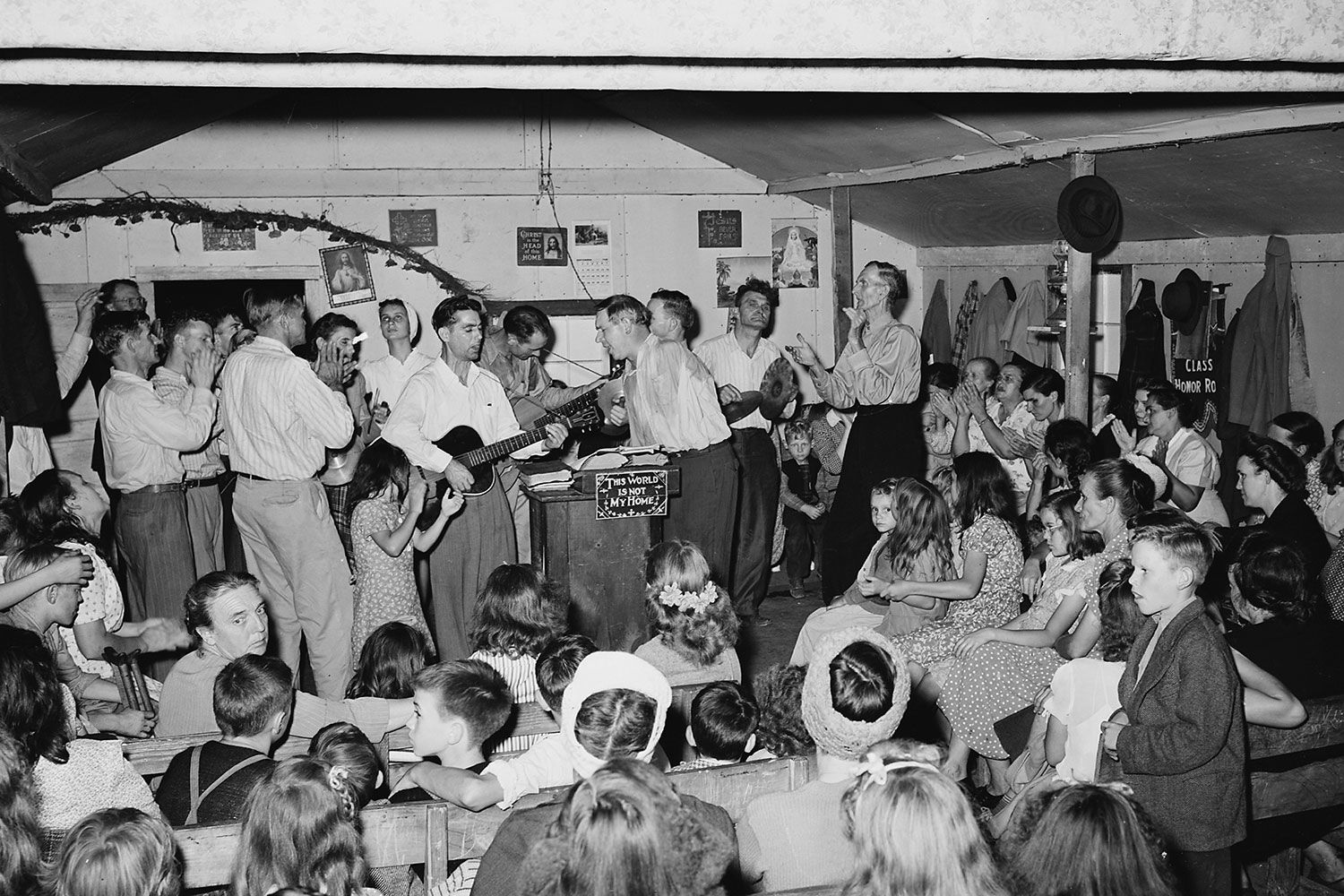
Services at the Pentecostal Church building of God, Lejunior, Harlan County, Kentucky, 15 September 1946.
The tv set preacher Jimmy Swaggart became a Christian megastar in the 1980s broadcasting from Baton Rouge, Louisiana. His popular crusades and regular services appeared on tv set sets across the U.s.a. and around the world. At its peak, his ministry was taking in over ane million dollars a week. He had honed a brash, bold, loud style of preaching that made him a revered figure, both in the context of the Assemblies of God – a group of affiliated churches that formed the world'due south largest Pentecostal denomination – and in the broader world of evangelicalism. Critics reviled his holier-than-thou pulpit posturing and his bellicosity. Some stations fifty-fifty took him off the air for his religious and cultural bigotry.
Like many other Pentecostal preachers – who were moving into politics at a rapid rate – Swaggart believed that the Holy Ghost emboldened him to witness the arrow-directly truths of the Bible. With his southern drawl, he thundered confronting Hollywood celebrities, evolutionary scientists, communists, homosexuals, Catholics, feminists, secular liberals and other 'enemies' of the faith. Americans had lost interest in the Bible, he warned with mortiferous seriousness. A reporter at the New York Times took notation. The Reagan-era televangelist was 'tapping some powerful resentments here; he is speaking to the disenfranchised'. The land rightly deserved God's judgment, Swaggart assured his audience with fury.
In the summertime of 1985, Swaggart was on the route, conducting one of his mass revival crusades in New Haven, Connecticut. Before the cameras and the glare of stage lights he paced back and forth, waving his arms similar he was fending off a swarm of bees. He raised his Bible loftier above his caput. He shouted at his audition virtually the moral degeneracy that dragged reprobates through the gates of hell. At one performance, he took aim at 'the devil's music': stone and gyre.
How had Christians fabricated peace with this vile, hideous music, he asked with urgency in his voice, drawing out words similar 'pul-pit' and 'bye-bull'. The result was a personal one for him, he confided, pausing for emphasis and lowering his voice before lunging at the crowd, finger pointed upward to drive home his jeremiad.
'My family started rock and roll!' he exclaimed in front of the silent associates of thousands. 'I don't say that with whatsoever glee! I don't say it with any pomp or pride! I say it with shame and sadness, because I've seen the expiry and the destruction. I've seen the unmitigated misery and the pain. I've seen information technology!' His voice peachy with emotion, he railed: 'I speak of experience. My family unit – Jerry Lee Lewis, with Elvis Presley, with Chuck Berry … started rock and roll!' His claim served an obvious rhetorical signal, merely there was also much truth to it.
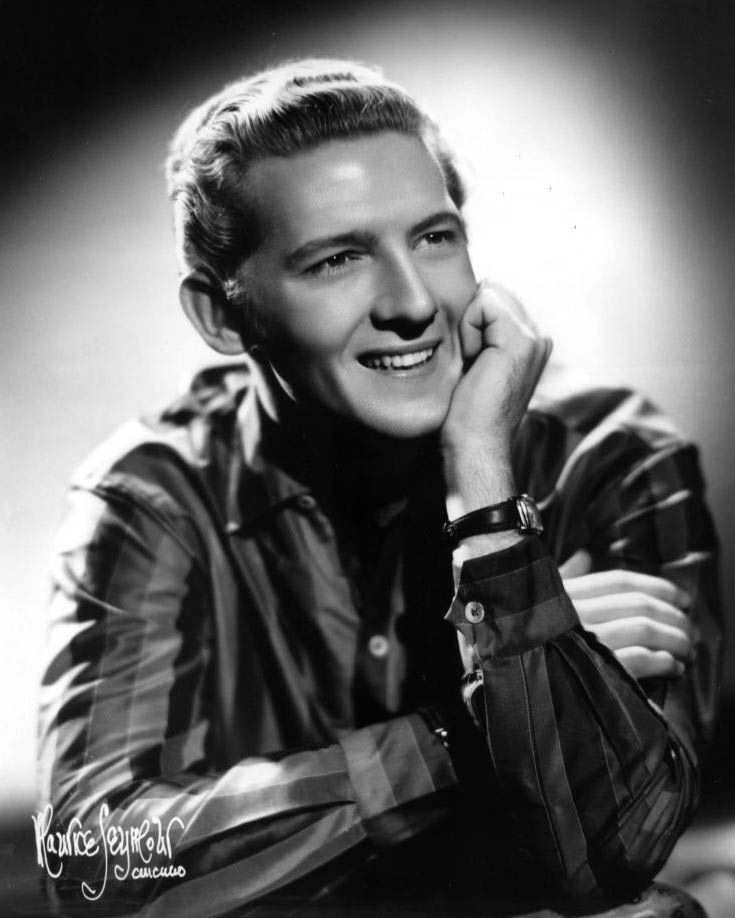
Indeed, Pentecostalism – the fast-growing apocalyptic religion of spiritual abundance, speaking in tongues, healing and musical innovation – inspired many first generation rock and rollers. Jerry Lee Lewis, Swaggart'southward cousin, along with Elvis Presley, Johnny Cash, Little Richard, B.B. King and others were all raised in or regularly attended Pentecostal services in their determinative youth. Rock and curlicue – the soundtrack of rebellion and the music of side-burned delinquents and teenage consumers – owed a surprising debt to Holy Ghost religion. It is truthful that Pentecostalism formed simply one of the tributaries that fed the raging river of stone and roll, but the importance of the spirit-filled faith to the new hybrid genre was significant.
Growing up in the Assemblies of God church, Jerry Lee Lewis and Jimmy Lee Swaggart were close. In fact, they were like brothers. They bonded over music and their shared Pentecostal experience. What they both lacked in formal education, they more than fabricated upward for in stage presence, style and charisma.
Jerry Lee's aunt and Jimmy Lee's grandmother, Ada, liked to tell family, friends, and anyone who would listen nearly the Holy Ghost baptism she experienced at a military camp meeting in Snake Ridge, Louisiana. 'You've got to get it' she implored. 'You've got to have it. Y'all really don't know the Lord like yous should until you lot receive it.' When the ability of the almighty struck her, she said, 'the presence of God became so real'. Suddenly 'it seemed as if I had been struck by a bolt of lightning. Lying flat on my dorsum, I raised my hands to praise the Lord. No English language came out. Only unknown tongues.'
The 'Godfather of Soul' James Brown could too reflect on a religious youth. Brownish spent his at the United House of Prayer church building in Augusta, Georgia. Its flashy leader, Sweet Daddy Grace, wore a cape and was 'similar a god on globe'. When Grace died in 1960, Ebony magazine called him a 'Cadillac-riding materialist' and 'a dark-brown-skinned P. T. Barnum who cracked the whip in a circus of gaudy costumes, wildly gyrating acrobats and brass bands that played as if God were a cosmic hipster'. Such criticism mattered little to the devout. In Dark-brown'southward estimation, 'Those folks were sanctified.' The Pentecostal saints 'had the beat … Sanctified people got more than fire'.
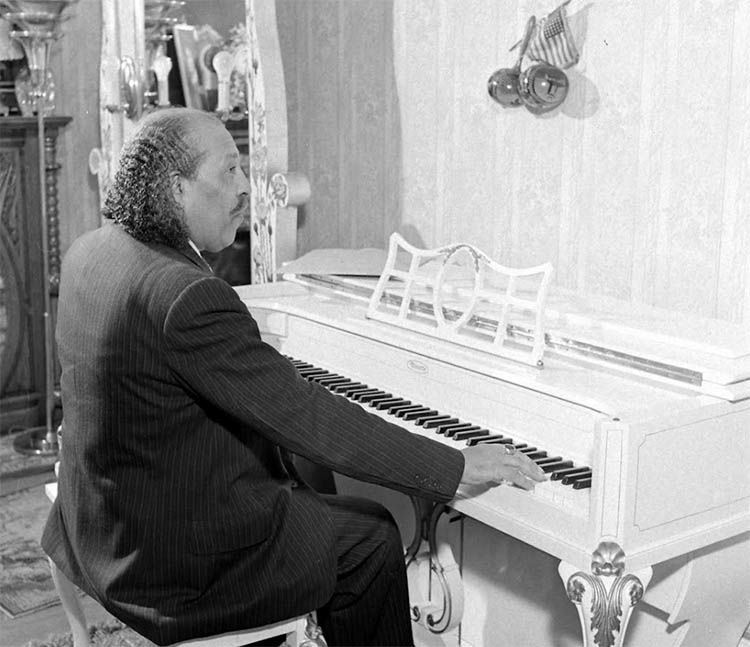
That fire and the beat certainly inspired Ray Charles. The brilliant pianist was a great admirer of sanctified music and especially black quartets. Charles admitted to lifting material from a song called 'You Better Leave That Liar Alone' for his incomparably secular vocal 'Yous Better Go out That Adult female Solitary'. The well-nigh obvious and stiff of these retooled spiritual numbers was his 1954 smash hit 'I've Got a Woman', co-written with Renolds Richard. The pair used 'Information technology Must Be Jesus' past the Southern Tones, for inspiration.
Sanctified music and gospel songs, along with the unbridled religious services that accompanied them, made a deep banner on Jerry Lee Lewis and the early on stone and rollers. But as Lewis ditched a Pentecostal ministry for a life of stardom, a major rift adult between him and his pious cousin. Lewis recorded at Dominicus Records in Memphis in late 1956 and shortly after became an international glory. A wild, piano-pounding performer, he succumbed to the lures of drugs and alcohol. Swaggart later made clear what he thought of his cousin and his wayward life. 'Why do I demand twoscore suits?', he asked:
I'm clothed in a robe of righteousness! Why do I need Cadillacs and Lincolns when I can ride with the Rex of Kings? Jerry Lee can get to Sunday Records in Memphis, I'm on my way to heaven with a God who supplies all my demand according to His riches in celebrity by Christ Jesus.
Jerry Lee felt the sting of such rebukes. Elvis Presley, who attended the Memphis First Assembly of God church before fame fabricated that impossible, was also injure when Southern Baptists, Catholics and Methodists lined up to denounce his stage shows and his 'wicked' music. Billy Graham, America's almost famous preacher, claimed that the King of Rock and Coil's fame was due to the 'mystery of iniquity', which was 'ever working in the earth for evil'.
Unsurprisingly, Jerry Lee, caught between God and the devil, was peculiarly song about his burning sense of guilt. In 1979, critic and musician Robert Palmer asked 'The Killer' if he believed he was going to hell for playing rock and roll. 'Yeah', Lewis replied confidently. 'I know the correct style', he said. 'I was raised a good Christian. But I couldn't make it … Too weak, I guess.'
In October 1957, the tape was rolling at Sunday Records in Memphis on a recording session for 'Great Balls of Fire'. The Assemblies of God Bible Institute, in Waxahachie, Texas had expelled the young Lewis for playing a boogie-woogie version of 'My God Is Real' in 1950. Vii years afterward he was using his talent for sinful ends and he knew it. Music should non do the piece of work of Satan, he told Sun Records' founder and producer Sam Phillips:
When it comes to worldly music, rock and roll, anythin' like that, you lot're in the globe, and you haven't come from out of the world, and you're still a sinner. And you're a sinner. You're a sinner unless you be saved and born again, and be fabricated as a footling child, and walk before God, and exist holy. And blood brother, I hateful y'all got to exist and so pure, and no sin shall enter there. No SIN! Cause information technology says 'no sin'. Information technology don't say just a little flake. It says, 'no sin shall enter there'. Brother, not 1 niggling bit. Yous got to walk and TALK with God to become to heaven … Mr. Phillips , I don't care … it own't what you believe. It's what'southward written in the BIBLE!
The Lord demanded absolute obedience and purity and Phillips could not convince Lewis otherwise. The Bible said what it said and no amount of theological flimflam about 'interpretation' could change that.
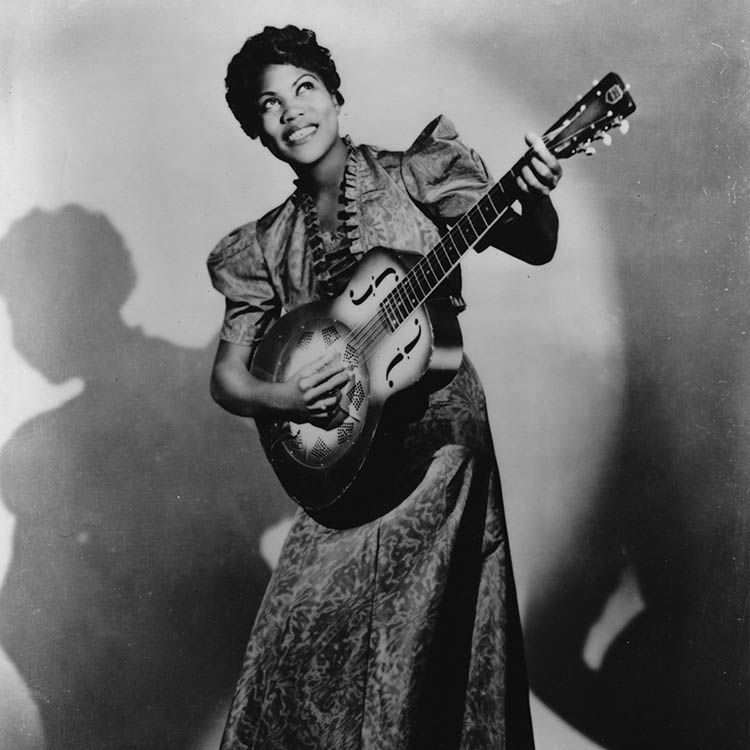
Other stars in the early years of rock and curlicue – many with connections to Pentecostal communities – were equally consumed by guilt. Johnny Cash, who attended Church building of God services in Dyess, Arkansas, struggled with alcohol and amphetamines. Lilliputian Richard, likewise, was convinced that his stardom – and his homosexuality – would put him on the road to perdition. Somewhere along the way, he had strayed from the path of righteousness. In his youth, Richard said he liked the fiery Pentecostal services the about, where enthusiasts spoke in tongues and did the 'holy trip the light fantastic'. He had long lasting memories of the singing evangelist Brother Joe May and the Pentecostal guitarist Sister Rosetta Tharpe.
While on tour with Gene Vincent and Eddie Cochran in Commonwealth of australia in 1957, Richard decided to plough his life around. When his ring mates doubted his sincerity, Richard tried to convince them by tossing $8,000 worth of diamond rings into a river. He took the Russian launch of Sputnik in 1957 to be a articulate sign of the apocalypse. He planned to enroll in a Seventh-day Adventist seminary. 'I wanted people to forget Fiddling Richard as a Rock 'north' Roller', he said. 'I was soon to be qualified as an evangelist similar Billy Graham.' He would later say, 'I believe this kind of music is demonic … I believe God wants people to plow from Rock 'n' Roll to the Rock of Ages.'
Other lesser-known rock and roll performers similar Jimmie Rodgers Snow ditched the stage for the Pentecostal pulpit. The son of state legend Hank Snow, he signed a tape contract with RCA, making minor, innocent hits like 'How Practice You Think I Feel?' (1954) and 'The Rules of Love' (1958) and toured with Buddy Holly, Bill Haley and His Comets and Elvis. Snow told the latter that he was contemplating a Pentecostal preaching career the same year that Richard made his turnaround in Commonwealth of australia. Elvis could not have known that Snow would later target him and other performs every bit emissaries of the devil. The thin, wiry rocker-turned-pastor with hair swooped back, still sporting sideburns, blasted rock and rollers and warned teenage fans against the wild new music. He hoped to show teens, 'the depths the devil can pull yous downwards to. He hates you and wants to destroy you'.
In 1971, Johnny Cash underwent a 2d, public, conversion experience and became a regular at Snow's Pentecostal Evangel Temple in Nashville, Tennessee. By and so Cash was aligned to a new religious movement that combined countercultural views, pop music and conservative Pentecostalism. The 'Jesus people', as observers dubbed these new Christian hippies, played loud, guitar music, worshipped in business firm churches and non-denominational communities and popularised a looser style of worship. Youth pastors and ministers in the movement wore sandals and fringed leather jackets like the one popularised past Dennis Hopper in Easy Rider (1969). Baton Graham joined the Man in Blackness on phase and grew his hair and sideburns a little longer in keeping with the times. America's pastor had made his peace with the style, if not the lyrical content, of rock music. Followers called the new sound Jesus music, Christian stone, or, merely, God rock.
Playlist: The Devil's Music
Similar Graham, Christianity was starting time to accept rock and scroll. In the late 1960s and 1970s, Christian rockers sang about the Pentecostal gifts of the spirit, the need for a spiritual revival and the fast-approaching return of Jesus. New tape labels similar Myrrh, Maranatha and Zondervan Records catered to a growing fan base. In the era when Americans elected their first built-in-once again evangelical president, Jimmy Carter, Christian rock bands and Christian messages in pop music became commonplace. By the late 1970s, artists including Donna Summertime, Al Greenish, Van Morrison, Arlo Guthrie and Bob Dylan infused their songs with Christian themes and evangelical messages. Dylan in particular was inspired by the Charismatic Motility which, much similar the Pentecostals, emphasised the gifts of the spirit and promoted an open and expressive style of worship. Many charismatics, Dylan included, thought that the world would shortly come to an finish. Soon, there were new charismatic denominations equally well as charismatic factions inside mainstream Protestant and Catholic churches.
Yet prominent fundamentalists were having none of it. Some worried that the music smuggled Pentecostal behavior into their churches. Fifty-fifty for some Pentecostals, the music was degenerate and had no place in their churches. 'You cannot proclaim the bulletin of the anointed WITH THE MUSIC OF THE DEVIL!' shouted Swaggart in 1987. That same yr Swaggart co-authored Religious Stone 'n' Roll, a Wolf in Sheep'due south Habiliment to set out his clear views on the bailiwick. 'I had to bow my head in shame', Swaggart lamented at 1 of his crusades. 'My heart ached and injure when I had to admit to … 2 Baptist brethren that non all, thank God, but near, most of the so-called Christian rock musicians come from Pentecostal ranks!'
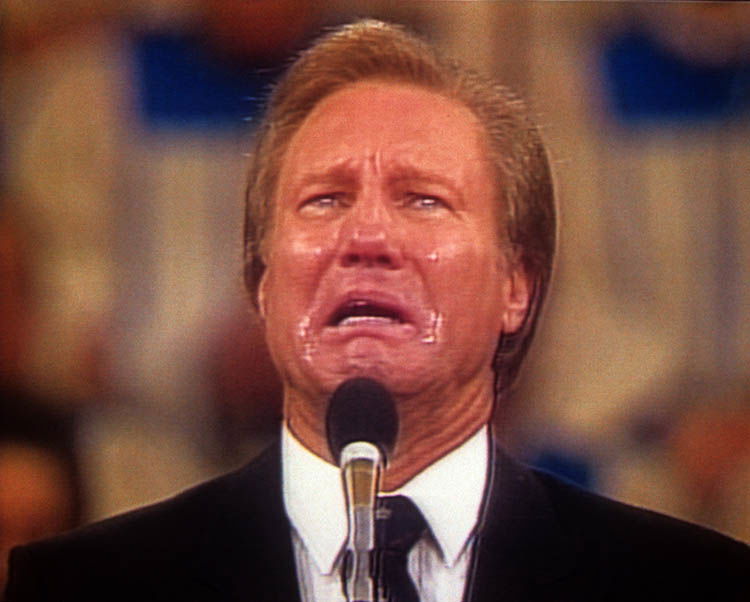
Presently, Swaggart'southward profile was diminished by scandal. Early in 1988, his face contorted with grief, Swaggart tearfully admitted to the eight,000 congregants of his Baton Rouge Family Worship Center that he had sinned against them and against God. His affair with New Orleans prostitute Debra Murphee had go public knowledge. The national media now focused their attention on the licentious private life of a humiliated Swaggart. Like his cousin, Jerry Lee, Swaggart now knew what it felt like to be a moral leper.
Despite holdouts confronting Christian rock, including the publically shamed Swaggart, sanctified popular music had become a powerful strength by the 1990s. By the turn of the century, so-called contemporary Christian music – an umbrella category containing rock, rap, pop, worship and related genres – had reached an astonishing $i billion in annual sales. It outsold jazz and classical music combined. Church services around the world now regularly featured wailing singers, heavy drums, electric guitars and synths. As Pentecostalism inspired early rock and rollers, now the influence went in the other management. Rock music had worked its way into countless congregations. The driving beat out, the interracial element, the feline sexuality and the lyrics that had made fundamentalist Christians recoil in horror in the 1950s had become mainstream.
Randall J. Stephens is the author of The Devil's Music: How Christians Inspired, Condemned, and Embraced Rock 'n' Roll (Harvard University Press, 2018).
Source: https://www.historytoday.com/miscellanies/god-gave-rock-and-roll-you
0 Response to "When I Am Weak Thou Art Strong Jimmy Swaggart Song"
Post a Comment